
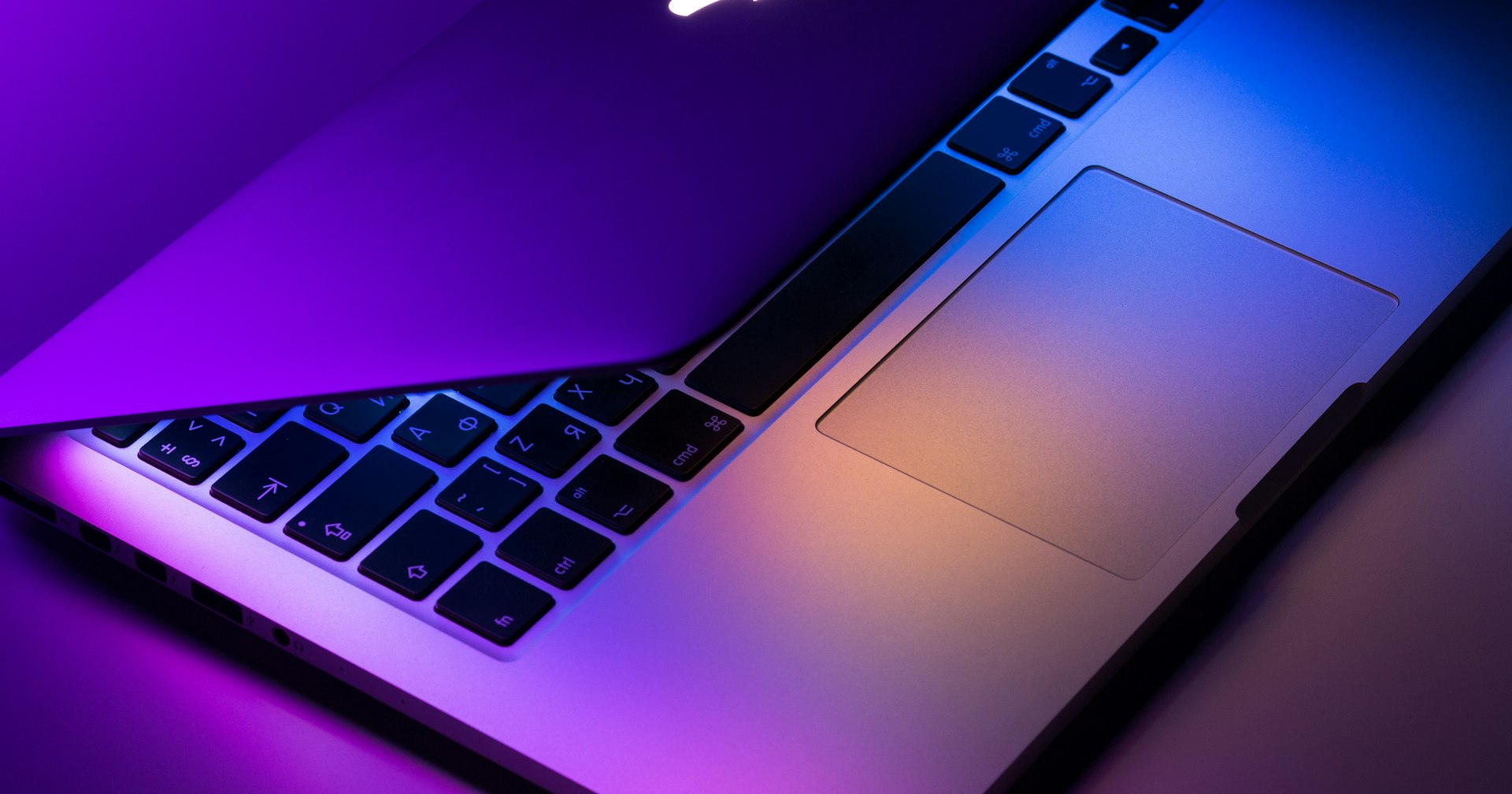
Stores still sell today’s Liquid Retina XDR. Group chats already talk about “Apple’s first OLED MacBook.” Some people bolt that story to the autumn 14-inch chip refresh. Others treat a touchscreen as something the whole Pro line will get.
Today is 16 September 2026. There is no Apple Newsroom post and no new chip filter in the store. When the entry machine might change silicon is in When Is the M6 MacBook Pro Coming? 2026 Release Date, Price, Specs, and Latest News. How Siri AI uses a large canvas is in What is macOS 27 Siri AI? Features, how to use it, and which Macs are supported. Below we only split four things: release timing, touch, price, and specs—and whether they land on the same machine.
Release timing: is the window closing?
As of today there is no official date. What you can check is evidence grade, not a day on a calendar.
On 14 September 2026, Bloomberg’s Mark Gurman said the rumored 14- and 16-inch touch OLED MacBook Pro units are running macOS 27.1. He had previously written “late 2026 to early 2027.” This time the machines sat on a “later this year” list, so outlets read him as more confident about a 2026 ship. The consumer window for macOS 27.1 is also around late October—that is a software cadence, not a delivery date.
Earlier on the supply side: Korean outlet The Elec reported in May 2026 that Samsung Display’s Gen 8.6 OLED line had crossed 90% yield, with some steps at 95%, and that panels may ship as tandem two-stack OLED with oxide TFT. Those numbers say the panel line is climbing. They do not lock a retail day by themselves.
| Evidence grade | What you can confirm now | What you still cannot |
|---|---|---|
| A: official | Specs and list prices of current M5 / M5 Pro / M5 Max MacBook Pro | Date, name, and retail price of an OLED machine |
| B: first-hand report | Internal 27.1 testing; 14/16 sizes; codes K114 / K116 | Whether the badge is Pro or Ultra |
| C: second-hand | The same Gurman note amplified | Credibility does not upgrade with copies |
| D: unsourced | — | A leak pinned to a specific day |
Where would a touchscreen land first?
If the reports hold, this would be Apple’s first touch Mac notebook, and touch plus OLED would sit on the high-end 14- and 16-inch machines—not ride along with an entry 14-inch chip swap.
Rumors also keep repeating a thinner chassis, a new hinge, and a Dynamic Island in place of the notch. Some writers use MacBook Ultra. Gurman himself is not sure Apple will use that badge; Macworld once misnamed iPhone Duo as iPhone Ultra. A brand name is not a purchase order.
For developers: whether macOS 27 reshuffles menus and pointer logic for touch waits on a real SDK. Do not put “full touch rewrite” on this quarter’s app schedule. Finger taps and trackpad precision are two paths; keep separate QA samples.
How high would the price sit?
Start with numbers you can already check in the store (US, before tax; after the June 2026 memory price rise, live pages may sit above the March Newsroom figures—re-check apple.com before you pay):
| Current model | March 2026 Newsroom starting price |
|---|---|
| 14″ M5 | $1,699 |
| 14″ M5 Pro | $2,199 |
| 16″ M5 Pro | $2,699 |
| 14″ M5 Max | $3,599 |
| 16″ M5 Max | $3,899 |
There is no official OLED price. Gurman has used two history checks: iPad’s move to tandem OLED lifted the start price by about 20%; in 2017 iPhone X first pushed the start price to $1,000. His read is that the new machines are more likely to sit above today’s M5 Pro / M5 Max than to pull them overnight. Third parties writing $2,399 for 14-inch or $3,999 for Max are estimates, not tags.
China and EU tax-inclusive prices cannot be a straight dollar conversion. Storage and unified-memory steps often raise the street price before the “panel premium” does.
How to split spec rumors from machines you can buy
On 3 March 2026, Apple announced M5 Pro / M5 Max for the current high-end MacBook Pro. Later reports say this cycle may skip M6 Pro / M6 Max and save the next high-end silicon for M7. An OLED touch machine would therefore start on M5 Pro / M5 Max already on sale, and spend the budget on the panel, chassis, and touch stack.
| Axis | Current M5 / M5 Pro/Max | Rumored OLED high-end | Rumored entry M6 refresh |
|---|---|---|---|
| Chip | Official | M5 Pro / M5 Max (reports) | Base M6 |
| Display | Liquid Retina XDR (mini-LED) | tandem OLED | Current panel, not OLED |
| Touch | No | Yes | No |
| Design | Current chassis | Thinner, or Dynamic Island | Reportedly unchanged |
| Window | On sale | Late 2026–early 2027 | Often written as October 2026 |
Samsung-side notes also mention hybrid encapsulation and harder brightness/lifetime targets. Laptop OLED is harder than phone OLED, which is one reason the window still moves.
How to wait without mixing three product lines
Do not put three lines on one purchase request:
| What you need | Steadier move |
|---|---|
| Local compiles and full peripherals within weeks | Buy current M5 / M5 Pro, or add a Mac that stays awake |
| Only a newer base chip; old panel is fine | Watch the entry M6 announcement; do not lock it to OLED high-end |
| First OLED + touch, and you can eat a premium and lead times | Set a stop-wait date; do not freeze delivery before an official post |
| Build queues growing; notebook shape does not matter | Add remote Apple silicon first; change the screen later |
How to read a new-geometry premium also shows up on another launch line: Is iPhone Duo Worth Pre-ordering Now? Buying Advice Before the October 23 Launch: Price, Specs, Pros and Cons, and How It Compares to iPhone 18 Pro Max—the money buys a new shape, not a faster score on the same SoC.
Frequently asked questions
Has Apple’s first OLED MacBook shipped?
No. As of 16 September 2026 there is no Newsroom post and no OLED MacBook product page you can order.
Is it the same machine as the autumn M6 MacBook Pro rumor?
On current reporting, no. The entry 14-inch may only move to base M6 and keep the panel; OLED and touch sit on another 14/16 high-end tier.
Will it have a touchscreen? Will the price rise?
Touch is the core high-end rumor. There is no official price. The historical read is “above today’s Pro/Max,” not an OLED sticker on the $1,699 rung.
Should a development machine wait for this?
Xcode, signing, and overnight CI do not need OLED. People waiting on a screen-and-touch workflow and people waiting on build throughput should split the budget.
OLED fixes the screen on the desk, not the compile queue at night
Tandem OLED and touch matter more for grading, comparing proofs, and circling notes on glass. Certificates, Simulator, and overnight tests still want a machine that does not close. A Mac mini idles around 4W; Apple silicon unified memory indexes a large repo better than a gaming laptop left on 24 hours.
macOS ships Unix, Homebrew, Docker, and SSH. Crash rates stay low for unattended runs; Gatekeeper and SIP cut the risk of a long-lived build host. Versus a same-price Windows box you skip a WSL layer and keep a shorter certificate chain.
Pick the screen by whether you need the first OLED. Pick the build box by whether it will close—see the plans, leave touch for the proof on the desk, and leave compiles on a Mac that stays awake.